
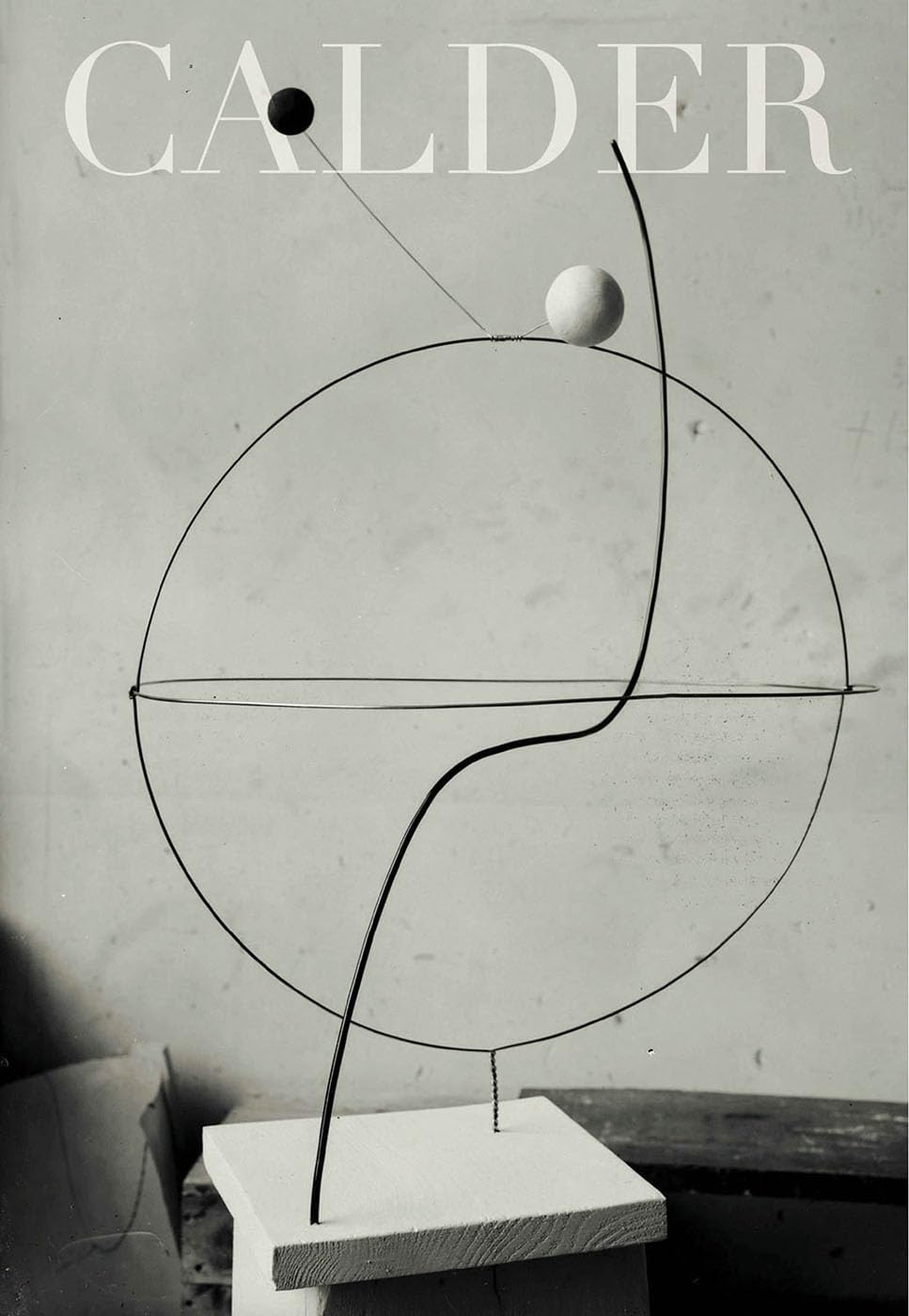
Calder: Sculpting Time
Produktdetails
| Artikelnummer | 233640125 | Erscheinungsdatum | 2026/06/27 | Listenpreis | €17.44 | Modellnummer | 233640125 | ||
|---|---|---|---|---|---|---|---|---|---|
| Kategorie | |||||||||
A wide-ranging selection of works from Calder’s most prolific period highlights the role of time in his groundbreaking sculptural practiceFrancisco Goya claimed in 1801 that “time also paints.” More than 200 years later, this quote, now turned maxim, could refer to the way in which time modifies how we relate to art. A more conceptual interpretation could also be held where time itself is the medium. Taken in this last interpretation, few artists have understood this notion better than Alexander Calder.Sculpting Time explores time as a medium in Calder’s work: both as an integral part of his kinetic sculpture and as an external factor vis-à-vis the grand developments of the 20th century. This is best exemplified in his earliest sphériques as well as the Constellations (a term coined by Marcel Duchamp and James Johnson Sweeney in 1943) he created out of wood and wire during World War II, when sheet metal was not available. By introducing motion into a static art form, Calder implies the passage of time; thus, time also sculpts. This handsome clothbound volume, printed on Tatami paper, is filled with contemporary images of works from the 1930s to the 1970s, as well as archival photographs of Calder’s studio.Alexander Calder (1898–1976) moved to Paris in the late 1920s, where he found himself at the center of the city’s artistic avant-garde. In 1930, he invented the mobile―an abstract sculpture made of independent parts that incorporate natural or mechanical movement. He would continue to explore the possibilities of this visual language for the rest of his career, eventually shifting to monumental constructions and public works. Read more
| ISBN10 | 8836657826 |
|---|---|
| ISBN13 | 978-8836657827 |
| Language | English |
| Publisher | Silvana Editoriale |
| Dimensions | 7.75 x 1.2 x 11.5 inches |
| Item Weight | 2.75 pounds |
| Print length | 168 pages |
| Publication date | October 15, 2024 |
Korrektur der Produktinformationen
Wenn Sie Unvollständigkeiten oder Fehler in den Produktinformationen auf dieser Seite bemerken, nutzen Sie bitte das Korrekturformular unten.
Korrekturanfrage